It seems that Halloween has become just as much a holiday for adults as it is for children. Although I haven't celebrated Halloween since I was a child (and have no plans to do so this year), I know many people who do. So, if your Halloween plans include getting decked out in costume, forgo the cheap plastic mask and take your cue from these swells, who took their fancy dress very seriously.
Image above: Christian Dior attired as the King of Beasts for
Le Bal des Rois et Reines (King and Queens Ball), 1949.
Elsa Schiaparelli dressed as a blackamoor. (Photo by Horst)
Misia Sert in exotic fancy dress. (Photo by Horst)
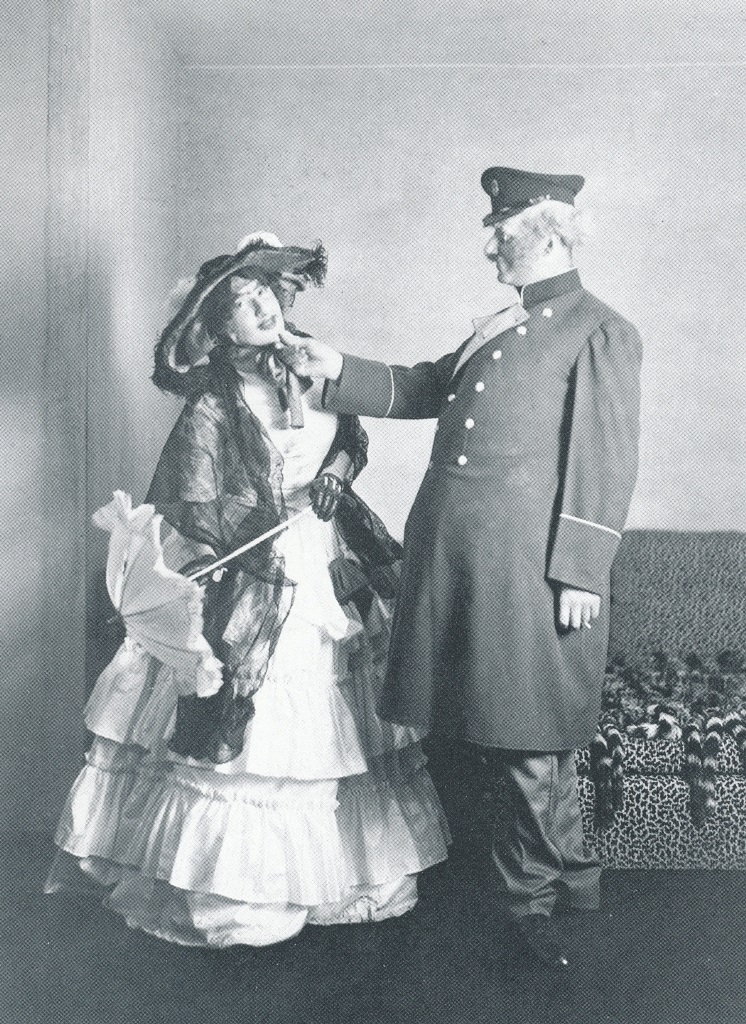
Cecil Beaton in drag, dressed as writer Elinor Glyn. (Photo by Horst)
Elsie de Wolfe outfitted for
Le Bal Oriental. (Photo by Horst)
A costumed Jean-Michel Frank, looking rather Fu Manchu. (Photo by Horst)
Daisy Fellowes, bewigged and bedecked in satin. (Photo by Horst)
Valentine Hugo dressed as a merry go-round at
Le Bal des Jeux (Games Ball), 1922.
Emilio Terry (left) as Mme Fichini and Jean de Moulignon as General Dourakine,
Le Bal Bibliothèque Rose (Pink Library Ball), 1929.
Coco Chanel at
Le Bal de la Fôret (Forest Ball), attending as a tree. 1939.
Baroness de Almeida photographed as a sheaf of wheat. 1929.
Jacques Fath and his wife attending the legendary
Bal des Masques et Dominos du XVIIIe Siècle (18th-century Masks and Dominoes Ball), hosted by Charles de Beistegui at his Palazzo Labia, Venice, in 1951. Fath was costumed as the Sun King, while his wife was Queen of the Night.
And last but certainly not least, Audrey Hepburn in a bird-cage headdress at
Le Bal Surréaliste (Surrealist Ball) in 1972.




 , I was reminded of Rex Whistler's proclivity for cartouches, which he incorporated into his murals, like those he painted for Brook House, above, as well as his myriad illustrations:


